
When you develop a new educational resource, the question we usually ask ourselves is simple: does it work with the people it’s meant for?
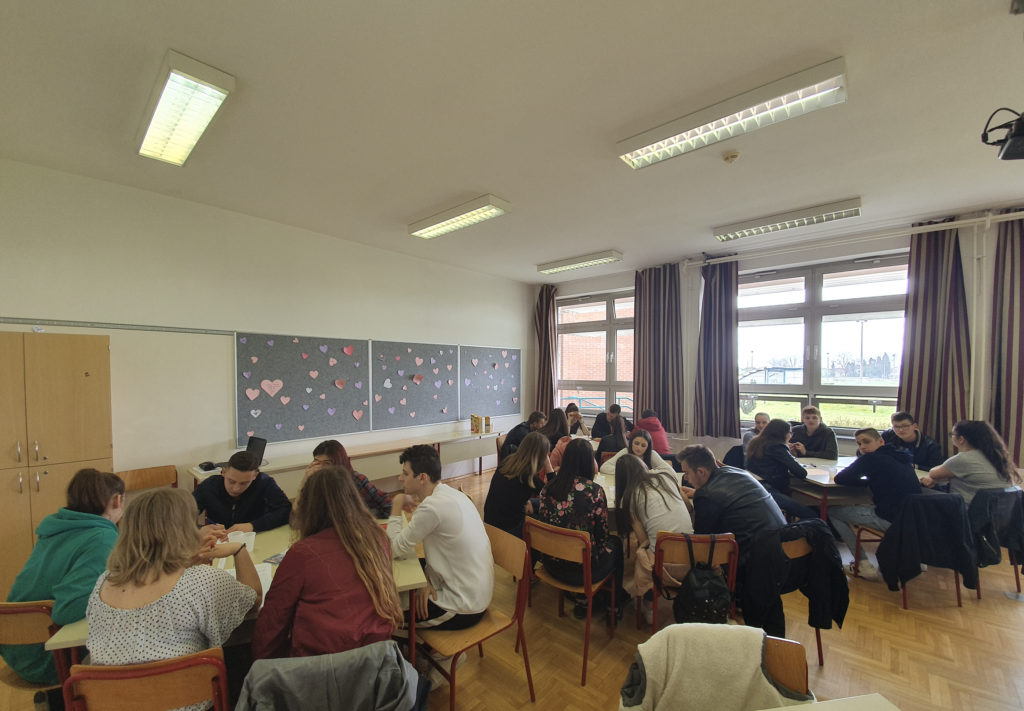
That is exactly why the influVET partnership organised piloting workshops with VET students in Croatia, Germany, and Serbia, with 60 students participating. The goal was to test the Toolkit in real classroom conditions and to create a space where students could openly explore what it actually means to build a career in the digital world – including influencer careers, online professionalism, and the skills needed to navigate it responsibly.
A practical, non-formal approach that students responded to
In all three countries, the piloting workshops followed a non-formal education methodology. Instead of long lectures, students worked through interactive exercises, discussions, small group tasks, and reflection activities. This format made it easier to speak honestly about topics that are often missing from formal lessons – like online reputation, unrealistic “success stories” the pressure of being visible online, and the difference between a hobby account and a professional digital presence.
The students who took part came from a wide mix of VET profiles – including health and care, business and administration, logistics and retail, economics, and technical-vocational programmes. That variety was useful, because it showed how relevant digital career topics have become for all vocational sectors, not just creative industries.
Croatia: from “I post for fun” to “my profile is part of my future”
In Croatia, workshops organised by DOMAS showed how quickly students connect with the topic once they see it linked to their real lives. Sessions on personal branding helped them map their online presence and notice what their bios, photos, and posting habits communicate to others. Many students were already active on Instagram and TikTok, but hadn’t thought about their profiles as something that could influence future opportunities.
Work on digital skills and professional communication also highlighted an important gap: students regularly use creative apps confidently, but feel less prepared when it comes to professional tools and structured collaboration. Role-play activities (like writing messages to brands) made students laugh and helped them realise why professionalism matters.
One of the strongest discussions came during the session on influencer culture and career choices, where students openly talked about online hate, but we also discussed what happens “behind the scenes” that doesn’t show up in social media posts. The piloting ended with personal career action plans, turning reflection into concrete next steps.
Germany: digital career guidance is needed beyond “job search websites”
In Hannover, Outreach Hannover e.V. implemented several sessions with students from vocational schools focused on business/administration and logistics/retail. The workshops explored job search strategies in the digital age, remote work opportunities, online career research, social media action planning, and privacy and security risks.
A clear pattern was shown – students were familiar with popular platforms, but many had never thought about professional online presence in a structured way. Practical tasks, like creating a “digital business card” or building a posting plan connected to career goals, were challenging, but also motivating. Students appreciated the fact that the workshops didn’t just talk about careers in theory, but asked them to actively create something they could use.
The privacy and security session stood out as well. Several students admitted they share personal information too openly online, and the workshop helped them understand why digital safety is not only a personal issue, but also a career issue.
Serbia: strong motivation – and strong need for credible guidance
In Novi Sad, CNELL worked with two vocational schools representing both business and technical programmes. Students were enthusiastic and highly engaged, especially when discussing personal branding and the reality of building a professional identity online.
Workshops on credible sources and authentic career advice were particularly relevant. Students recognised how common it is to encounter “quick success” narratives online and how difficult it can be to separate genuine guidance from content that is simply selling dreams. Many students shared that new professions like influencer careers are rarely discussed in school, and that they often rely on peers or online creators for orientation.
The sessions on building a professional online presence (including LinkedIn) gave students a new perspective, and the final career action plan workshop helped them define realistic steps, such as improving profiles, following credible information sources, and exploring opportunities that match their skills and interests.
Instead of conclusion…
In all the three countries, the piloting workshops showed the same thing:
VET students are interested in digital career pathways, but they need structured guidance to approach them realistically and responsibly.
Teachers and facilitators also highlighted the value of the Toolkit as a structured resource they can use in practice. At the same time, the piloting made it clear that students come with very different levels of digital confidence, and that activities need a good balance between discussion, action, and reflection.
A you may wonder – what’s next for our Consortium? Now, we are developing a Curriculum for teachers with 3 modules, and we will have local training courses. Besides that, in every country we have started with dissemination and we are planning to organise national-level conferences to disseminate even more.
So, stay tuned and follow us for more!