
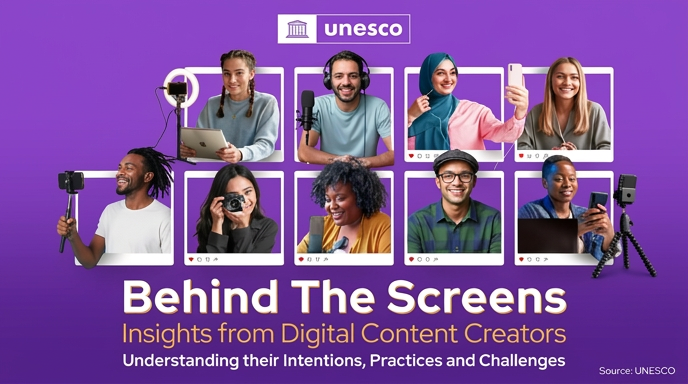
Even though our project has ended, we will still continue to share interesting resources for you and share some glimpses of our project with you! So, stay tuned! Today, we bring you one interesting resource from UNESCO!
Influencers are no longer only entertainers. They shape opinions, promote products, explain trends, share personal experiences and sometimes even influence how young people think about their future careers. For VET students, who are preparing to enter the labour market, influencer content can be both inspiring and misleading.
This is why media literacy is becoming an essential part of modern career guidance.
One interesting educational resource for this topic is UNESCO’s article “2/3 of digital content creators do not check their facts before sharing, but want to learn how to do so”, which presents findings from the “Behind the Screens” study. UNESCO reports that 62% of digital content creators do not carry out rigorous and systematic fact-checking before sharing information, while 73% would like to be trained to do so. This makes the article very relevant for educators who want to discuss influencers, online trust and responsible digital communication with students.
This opens an important question for VET education: if influencers are becoming important sources of information for young people, how can schools help students understand what they see online?
For VET teachers, trainers and career guidance experts, this resource can be used as a starting point for discussion with students. Instead of simply telling students not to trust influencers, educators can guide them to ask better questions: Who created this content? What is the purpose behind it? Is it based on facts, personal experience or paid promotion? Are sources mentioned? Is the influencer transparent about sponsorship? What information is missing?
These questions are not only useful for analysing social media. They are also connected with career management. Many young people follow influencers who present success, money, travel, entrepreneurship or “dream jobs” in a very attractive way. But online content often shows only one part of the story. Students may see the results, but not the planning, costs, contracts, stress, editing, algorithms, unstable income or ethical responsibility behind the scenes.
This is why the topic of influencers can become a powerful educational tool. It helps students develop critical thinking, digital responsibility and more realistic expectations about work in the digital age. It also helps them understand that online visibility comes with responsibility: sharing information can influence other people’s decisions, attitudes and behaviour.
VET experts can use UNESCO’s resource in teacher training, media literacy workshops or career guidance sessions. A simple activity could be organised around analysing influencer posts. Participants can choose one public post and discuss whether it is informative, promotional, emotional, educational or misleading. They can also examine whether the creator gives sources, marks sponsorship clearly, uses persuasive language or presents a lifestyle that may create unrealistic expectations.
The goal is not to criticise influencers as a group. Many creators produce valuable, educational and socially useful content. The goal is to help students become more aware users of digital media and, possibly, more responsible content creators themselves.
In the influencer era, career guidance must go beyond traditional professions. Students need support in understanding digital work, online identity, self-presentation, media messages and the difference between popularity and professional credibility.
UNESCO’s resource reminds us that trust online does not happen by accident. It is built through accuracy, transparency, responsibility and critical thinking. These are exactly the skills that VET students need — whether they want to become influencers, entrepreneurs, employees or simply active citizens in a digital world.
The InfluVET project encourages VET educators and experts to continue using resources like this in their work with young people. Influencers are already part of students’ lives. Now it is time to make them part of meaningful educational conversations.
You can find the UNESCO article here: https://www.unesco.org/en/articles/23-digital-content-creators-do-not-check-their-facts-sharing-want-learn-how-do-so-unesco-survey